

Can What You Eat Affect How Stressed You Feel?
Alexandra Russell
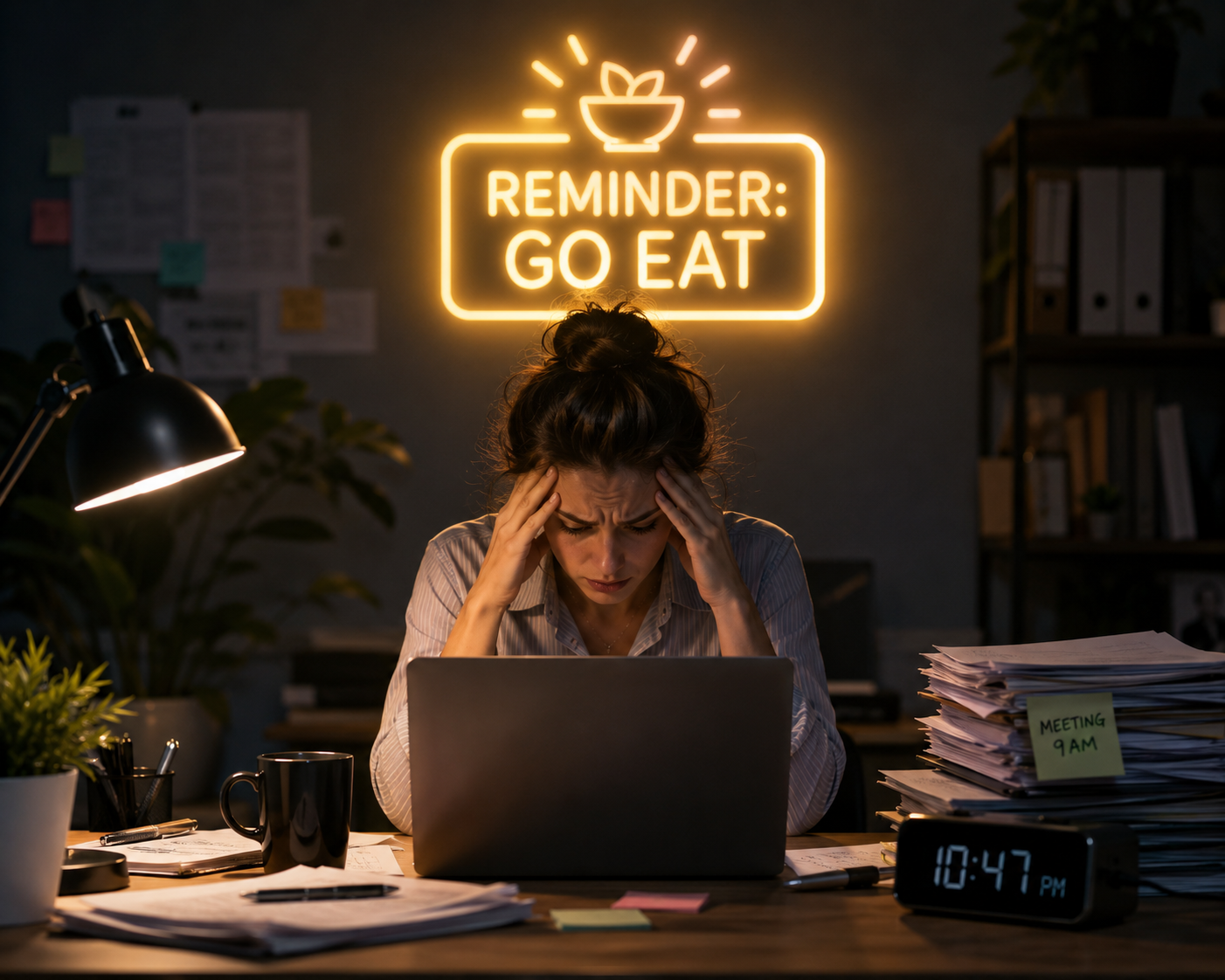
When life gets busy, nutrition is often one of the first things to change.
You skip breakfast. Lunch happens at your desk. Dinner becomes whatever is fastest. And somewhere between meetings, deadlines, and responsibilities, caffeine starts doing more work than food.
But stress and nutrition have an interesting relationship:
Stress can change how you eat and what you eat may influence how you feel.
That doesn't mean there's a magical “stress-fighting” food. The science is more complicated and more useful than that.
Stress Can Change the Way You Eat
Stress doesn't affect everyone's appetite the same way.
Some people eat less. Others find themselves reaching more frequently for highly palatable foods or eating even when they aren't physically hungry.
A meta-analysis examining stress and eating behavior in healthy adults found that stress was associated with increased overall food consumption as well as greater consumption of less-healthy foods. Importantly, there was considerable individual variation.
This can create an unfortunate cycle:
You feel stressed → your normal eating habits change → maintaining good nutrition becomes harder.
That's one reason nutrition matters particularly during demanding periods.
Diet Quality and Stress Are Connected
Research consistently finds a relationship between stress and diet quality.
A systematic review and meta-analysis found that greater perceived stress was associated with poorer overall diet quality, although there was substantial variation between studies.
Other systematic-review evidence has found similar relationships between healthier dietary patterns and better measures of mental well-being.
But there's an important scientific distinction:
Association doesn't prove that poor nutrition causes stress—or that changing your diet will eliminate it.
Stress can affect food choices, and food choices may influence health and well-being. The relationship can run in both directions.
Your Brain Still Needs Nutrients When You're Busy
A stressful week doesn't change your body's basic nutritional requirements.
Your nervous system still relies on vitamins, minerals, amino acids, fatty acids, and energy from food to carry out normal cellular processes.
B vitamins are one example.
They participate in numerous processes involved in normal nervous-system and energy metabolism. A systematic review and meta-analysis of randomized controlled trials found that B-vitamin supplementation produced a modest improvement in measures of stress, particularly among people who may have had poorer nutritional or mood status.
The same analysis did not find a significant benefit for anxiety.
That's an important distinction.
Supporting normal nutritional status isn't the same thing as treating anxiety or making stress disappear.
Don't Search for a Single “Stress Food”
Dark chocolate. Magnesium. Green tea. Omega-3s.
You'll find plenty of lists online claiming particular foods can “lower cortisol” or “fight stress.”
But individual nutrient studies don't justify turning one food into a treatment for stress.
The better-supported approach is much less exciting:
Look at your overall dietary pattern.
Dietary patterns emphasizing fruits, vegetables, whole grains, legumes, nuts, fish, and unsaturated fats provide a broad range of nutrients rather than relying on one supposed stress-fighting ingredient.
Research into Mediterranean-style diets and mental well-being is promising, including associations with lower perceived stress, but much of the stress-specific evidence remains observational. More controlled trials are needed before we can say the diet itself directly reduces everyday stress.
Stress Doesn't Mean You Need More Caffeine
When stress leaves you feeling mentally exhausted, caffeine can be tempting.
Caffeine increases alertness, which can be useful.
But alertness and stress management are not the same thing.
And because caffeine can persist in the body for hours, continually adding more caffeine to compensate for fatigue can interfere with sleep which matters when you're already dealing with a demanding schedule.
Instead of automatically reaching for another coffee, ask whether you've eaten adequately, had enough water, slept enough, and given yourself an opportunity to recover.
Sometimes your body needs resources, not another stimulant.
Make Nutrition Easier When Life Gets Harder
You don't need a perfect diet during a stressful week.
You need one that's realistic enough to maintain.
Think about simple foods that provide a combination of protein, carbohydrates, fats, and micronutrients without requiring much preparation.
That might mean keeping fruit and nuts at work, preparing meals ahead of particularly busy days, or simply making sure you don't accidentally work through meals.
The goal isn't to eat your way out of stress.
It's to avoid letting stress push your basic nutrition to the bottom of the priority list.
Where Do Adaptogens Fit?
Adaptogens are frequently marketed as substances that help the body “adapt to stress.”
That's an interesting area of research but the term shouldn't be interpreted as proof that every ingredient labeled an adaptogen has been clinically demonstrated to reduce stress.
Different botanical and fungal ingredients have different evidence.
Nutrition provides the foundation.
Targeted supplementation can complement that foundation when the evidence supports the ingredients being used.
The Bottom Line
There's no food that makes a demanding job, packed schedule, or difficult day suddenly stop being stressful.
But stress and nutrition clearly interact.
Research shows that stress can change eating behavior and is associated with poorer diet quality. Meanwhile, maintaining adequate nutrition gives your nervous system the resources it needs to function normally.
So when life gets hectic, don't make nutrition another thing to obsess over.
Make it something you protect.
Your diet can't eliminate stress. But it can help ensure your body has what it needs while you're dealing with it.


Share and get 15% off!
Simply share this product on one of the following social networks and you will unlock 15% off!